
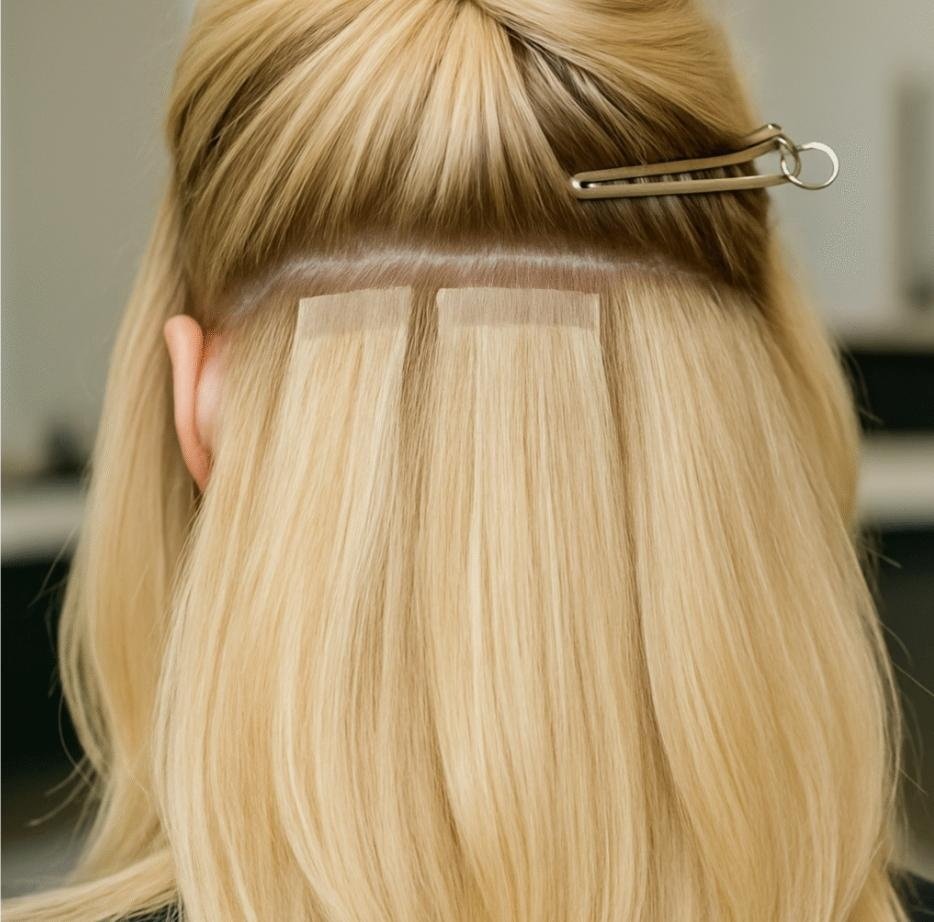
Hair extensions are easier to buy than ever.
A few taps on a phone can bring hundreds of options onto the screen within seconds. Social media is filled with creators unpacking long glossy bundles, priced lower than a dinner in London. The promise sounds simple: instant length, instant volume, instant transformation.
Yet women who regularly work with hair stylists, colourists, extension specialists, and long-term extension wearers avoid buying extensions online altogether.
The reason is not snobbery. It is an experience.
Behind many cheap online extensions sits a reality that most buyers only discover after the second or third wash.
Why Extensions Look Different After Washing
Many low-cost extensions arrive looking unusually shiny and soft. That appearance can be misleading.
Inexpensive hair is frequently coated in silicone during manufacturing. The coating creates temporary smoothness that photographs well under studio lighting and social media filters.
Once washed a few times, that coating begins to fade.
What remains underneath may feel dry, tangled, or rough at the ends. Hair can start matting together, especially near the neckline where friction builds throughout the day.
This is one reason many women feel disappointed after buying online. The hair they received no longer resembles the hair shown in the original advertisement.
Stylists say the real test of extension quality begins after repeated washing, brushing, and styling not on the day the package arrives.
The Colour Matching Problem Nobody Mentions
Hair colour is far more complex than many online shops suggest.
Two shades labelled “dark blonde” may look completely different in natural daylight. Tone, warmth, root depth, highlights, and undertones all affect how extensions blend against natural hair.
Screens also distort colour. Lighting, camera settings and editing filters can shift tones dramatically.
This explains why online colour matching fails so often.
Women frequently order extensions expecting a seamless blend, only to discover the hair appears too warm, too cool, too flat, or too heavy once applied in person.
Experienced stylists usually rely on strand matching because even small differences become visible once extensions sit beside natural hair.
For women considering tape extensions in London, colour matching becomes even more important because tapes sit close to the scalp and move directly alongside natural hair throughout the day.
Poor matching is difficult to hide once the hair is tied back or exposed in daylight.
Not All “Russian Hair” Is Actually Russian Hair
Hair sourcing has become one of the least transparent parts of the extension market.
Many online sellers use terms such as “Russian hair” because the phrase has become linked with softness and finer texture. Yet industry professionals have repeatedly raised concerns about inaccurate labelling across online marketplaces.
In reality, much of the hair marketed this way may come from entirely different supply chains.
Some hair is heavily processed to imitate finer textures before being resold under premium labels. Buyers have little way of verifying where the hair came from or how it was treated before purchase.
Traceability matters because processing affects how long extensions last and how naturally they behave once worn regularly.
Women investing in extensions for long-term wear care less about marketing language and more about consistency, texture, and realistic maintenance.
Why In-Person Consultations Still Matter
Extensions are not only a product. They are also a fitting service.
A stylist assesses-
- Hair density
- Scalp sensitivity
- Colour variation
- Hair texture
- Lifestyle habits
- Maintenance expectations
Without that assessment, women may end up choosing extensions unsuitable for their natural hair type or routine.
This becomes particularly important with tape extensions in London because tape placement affects both comfort and hair health. Adhesive quality, spacing and scalp proximity all influence how natural the extensions feel during everyday wear.
Improper fitting may lead to visible tapes, uneven weight distribution or tension on fragile areas of hair.
Experienced extension wearers say the fitting matters just as much as the hair itself.
Social Media Has Changed Expectations
Platforms such as TikTok and Instagram have made extensions appear extremely casual and disposable.
Short videos rarely show the long-term reality-
- Maintenance appointments
- Colour upkeep
- Daily brushing routines
- Shedding over time
- Changes after repeated washing
Most online content focuses on immediate visual impact because that performs well on social media.
Real life works differently.
Women who wear extensions regularly usually think about comfort, blending, durability, and maintenance long before they think about dramatic before-and-after images.
That practical mindset develops only after previous disappointments.
Why Many Women Eventually Move Toward Specialist Salons
Women who continue wearing extensions long term become more selective over time.
Many start with cheaper online purchases before realising that inconsistent quality usually leads to additional cost later through replacements, colour corrections, or damaged hair.
As a result, some eventually prefer specialist consultations where they can physically see hair texture, compare shades and discuss maintenance honestly before committing.
A respected London hair studio such as Tatiana Karelina has helped shape this more informed approach by focusing on personalised matching and naturally blended extensions rather than trend-driven online sales tactics.
That slower process may feel less convenient initially, but many women find it produces more predictable results.
Final Thoughts
Online extensions may appear simple, affordable, and accessible, but hair quality, colour matching, and fitting are far more complex than social media suggests.
Women with long-term experience of extensions usually understand that successful results depend on far more than glossy packaging or influencer recommendations.
The growing demand for professional consultations and properly fitted tape extensions in London reflects a wider shift toward informed, realistic hair care decisions.
In most cases, the women who know hair well are not avoiding online extensions because they are difficult to buy.
They are avoiding them because they have already learned what happens after the third wash.
