
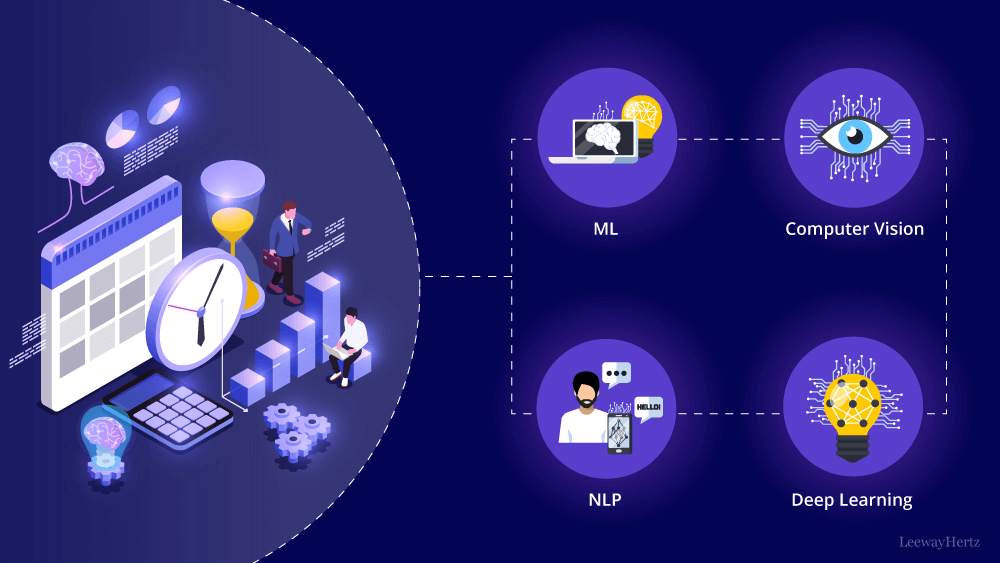
Modern businesses face an undeniable reality: manual processes that once seemed manageable now create bottlenecks that slow growth and frustrate teams. The repetitive tasks that consume hours of valuable employee time, the human errors that slip through quality checks, and the inconsistent workflows that vary between departments all contribute to operational friction that costs organizations both money and competitive advantage.
Business process automation emerged as a solution to these challenges, promising to streamline workflows and reduce manual intervention. However, traditional automation tools often fall short when dealing with complex, variable processes that require decision-making and adaptation. They work well for simple, rule-based tasks but struggle with scenarios that demand intelligence and flexibility.
This is where artificial intelligence transforms the automation game entirely. AI for business process automation creates systems that don’t just follow predetermined rules – they learn, adapt, and make intelligent decisions based on data and context. This technology addresses the limitations of conventional automation while opening new possibilities for operational excellence that were previously unimaginable.
The Power of AI in Business Process Automation
Traditional automation operates like a well-programmed machine, executing the same sequence of actions repeatedly without variation. While this approach works for straightforward tasks, it breaks down when processes require judgment calls or adaptation to changing circumstances.
Artificial intelligence fundamentally changes how automation works by introducing cognitive capabilities that mirror human decision-making processes. Machine learning algorithms analyze patterns in business data, learning from historical outcomes to make increasingly accurate predictions. This learning capability means that ai business process automation systems become more effective over time.
Instead of requiring human intervention for every exception, AI systems can evaluate multiple variables and make informed decisions that align with business objectives. This transforms automation from a rigid tool into a flexible business partner.
Key benefits of AI-driven automation include:
- Error Reduction: AI systems maintain consistent accuracy levels that exceed human performance in repetitive tasks, eliminating the costly mistakes that result from fatigue or distraction
- Time Liberation: By handling routine tasks automatically, AI frees employees to focus on strategic activities that require creativity and complex problem-solving
- Scalability: AI-powered processes can handle increased workloads without proportional increases in staffing or resources
- 24/7 Operation: Unlike human workers, AI systems can operate continuously, ensuring that critical processes never stop due to time constraints
Common Business Processes Transformed by AI Automation
Sales and Marketing Automation
The sales and marketing functions present ideal opportunities for AI automation because they involve large volumes of data processing and repetitive tasks that follow predictable patterns. Business process automation with AI in these areas delivers measurable improvements in both efficiency and effectiveness.
Key applications of AI in sales and marketing include:
- Intelligent Lead Scoring: AI systems analyze comprehensive data sets, including website behavior, email engagement, social media activity, and historical conversion patterns, to assign accurate lead scores, helping sales teams prioritize prospects most likely to convert
- Automated Email Campaigns: AI determines optimal send times for individual contacts, crafts subject lines that maximize open rates, and automatically adjusts campaign parameters based on performance metrics
- Advanced Customer Segmentation: Moving beyond basic demographic categories, AI identifies behavioral patterns and preferences that enable highly targeted campaigns with improved engagement rates
Finance and Accounting
Financial processes often involve high volumes of transactions and strict accuracy requirements, making them excellent candidates for AI automation. The technology addresses common pain points in finance departments while improving compliance and reducing operational costs.
AI automation transforms finance operations through:
- Automated Invoicing: AI systems extract information from purchase orders, delivery confirmations, and contracts to generate accurate invoices without human intervention, reducing processing time from hours to minutes
- Real-time Fraud Detection: AI analyzes transaction patterns, identifies anomalies, and flags suspicious activities instantly, with machine learning algorithms continuously updating detection criteria based on new fraud patterns
- Smart Expense Management: Automated systems categorize expenses, verify policy compliance, and flag unusual spending patterns while reducing administrative burden on employees
Customer Service
Customer service operations benefit tremendously from AI automation, particularly in handling routine inquiries and providing consistent service quality across all interaction channels. This automation allows human agents to focus on complex issues that require empathy and creative problem-solving.
AI-powered chatbots have evolved into sophisticated conversation partners that understand context, maintain conversation history, and seamlessly escalate issues to human agents when necessary. They provide instant responses to customer queries, reducing wait times and improving satisfaction levels.
Automated ticketing systems use AI to analyze incoming requests, categorize issues based on content and urgency, and route tickets to appropriate support agents. This intelligent routing reduces resolution times and ensures customers connect with agents who have the right expertise.
Sentiment analysis capabilities enable AI systems to monitor customer interactions across all channels, identifying dissatisfied customers before issues escalate and helping organizations maintain positive customer relationships.
HR and Recruitment
Human resources departments handle numerous processes that involve evaluating qualifications, tracking performance, and managing employee data – all areas where AI automation provides significant value while reducing bias and improving consistency.
Resume screening represents one of the most time-intensive recruitment activities. AI systems can analyze resumes against job requirements, identify relevant qualifications, and rank candidates based on their fit for specific roles, reducing time-to-hire while ensuring qualified candidates receive proper consideration.
When organizations decide to hire AI developers or other technical positions, AI-powered recruitment tools can assess coding skills, evaluate portfolio projects, and conduct preliminary technical interviews through automated systems.
Employee performance tracking benefits from AI automation through continuous monitoring of productivity metrics and goal achievement. Automated onboarding processes ensure new employees receive consistent training and complete required documentation, improving the new hire experience while reducing HR administrative overhead.
Building Your AI Automation Strategy
Successfully implementing AI automation requires careful planning and strategic thinking that goes beyond simply choosing technology solutions. Organizations must evaluate their existing processes, identify automation opportunities, and develop implementation roadmaps that align with business objectives.
The most effective approach involves starting with processes that have high volume, clear rules, and measurable outcomes. These characteristics make it easier to define success metrics and demonstrate value quickly. As organizations gain experience with AI automation, they can gradually tackle more complex processes that require sophisticated decision-making capabilities.
Integration considerations play a crucial role in automation success. AI systems must work seamlessly with existing business applications and data sources to provide maximum value. This integration requirement often necessitates working with experienced development teams who understand both AI technologies and business system architectures.
Achieving Seamless Operational Flow
The transformative potential of AI-driven business process automation extends far beyond simple task completion. Organizations that successfully implement these technologies create operational advantages that compound over time, leading to sustained competitive benefits and improved business outcomes.
The key to success lies in viewing AI automation as a strategic capability rather than a tactical tool. When properly implemented, these systems create seamless operational flows that adapt to changing business needs while maintaining consistent performance standards. The result is an organization that operates more efficiently, responds more quickly to market changes, and delivers better outcomes for customers and stakeholders alike.
