
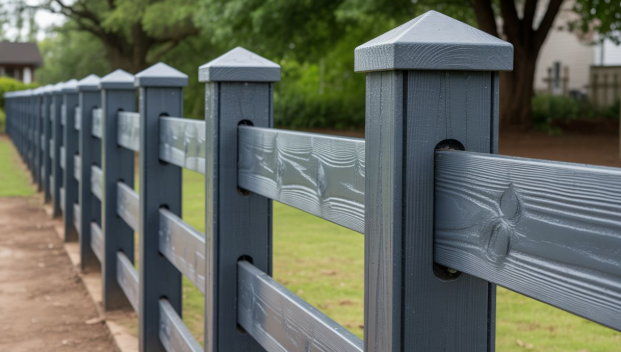
Recycled plastic fence posts have become an increasingly better substitute for conventional wooden fence posts to be used in diverse applications in the UK in recent years. Gardens, farms, equestrian paddocks, or open areas, these are the fencing solutions that are both environmentally conscious and offer the aesthetic value of the traditional fencing together with the longevity of the modern materials. Recycled plastic will not rot or splinter like timber and will not need constant curing like timber, thus saving property owners a lot of money in the long run and giving them assurance.
What Are Recycled Plastic Fence Posts?
Recycled plastic fence posts are made out of quality recycled polymers, typically on the basis of post-industrial and post-consumer waste. This is a sustainable material that appears to look like a piece of wood but has significantly better performance in an outdoor environment. Recycled plastic does not absorb moisture, does not rot, and is resistant to pest damage as compared to traditional wood or concrete.
Key Benefits of Using Recycled Plastic Fence Posts
The benefits of recycled plastic fence posts are several and convincing when compared to the traditional ones:
- Durability: The material is to be designed to withstand rain, frost, UV exposure, and temperature changes without warping or cracking.
- Rot-resistant and moisture-resistant: Timber does not have the ability to retain water or rot; therefore, plastic posts do not.
- Maintenance-free: It does not require any staining, painting, or chemical treatment. It is enough to wash it down occasionally with water.
- Free of Splinters: Clean sides remove the chances of splinters, and they become equestrian-safe and animal-friendly.
- Sustainable: It is made from recycled material, which minimises waste and promotes a circular economy.
Environmental Advantages
Recycled plastic fence posts will present environmental benefits that will be consistent with current sustainability objectives:
- They send the plastic waste out of the landfills and convert it into a durable product.
- Recycling of polymers means less reliance on fresh materials and fewer carbon footprints of fencing projects.
- A large number of suppliers in the UK have recycling take-back schemes, which propagate the concept of the circular lifecycle of old products.
These are the benefits that make recycled plastic fencing one of the best options among environmentally conscious homeowners, businesses, and landowners.
Comparison With Traditional Timber Fence Posts
The majority of the traditional timber posts have to be treated with preservatives at regular intervals to ensure that they do not rot and are not attacked by pests. They may also distort or splinter with time, necessitating expensive care and subsequent replacement. On the other hand, recycled plastic:
- Lasts decades structurally.
- Does not require chemical preservatives.
- Does not need extra treatment to be resilient to insects and fungi.
For properties in the UK that are vulnerable to rain and variable weather conditions, such as recycled plastic fence posts, the best option is the one with the lowest lifetime costs.
Typical Uses for Recycled Plastic Fence Posts
The plastic fence posts that are recycled are very diverse and can be applied in different fields:
Residential Gardens
They develop beautiful boundary fencing and contribute towards the demarcation of property lines with minimal maintenance.
Agricultural and Equestrian Land
Paddocks, livestock enclosed areas, and horse arenas are safe and strong against injuries from sharp edges or rot.
Commercial Properties
Long-lasting, business-like fencing is designed to make the business grounds look good without the maintenance burden.
Public Spaces
Its longevity and low-maintenance profile would be advantageous to parks, trails, and community gardens.
Installation Guide for Recycled Plastic Fence Posts
To install recycled fence post plastic, one has to prepare and detail it to last long:
- Plan Post Spacing: The spacing between posts is usually evenly spaced, usually about 1.0-1.5 metres, depending on the design of the fence and the terrain.
- Dig Holes: Trench holes to the required depth of dig (e.g., 500mm below ground level to a 1.2m fence).
- Use Quality Post Mix: A high-quality post mix or concrete gives more stability and prevents it from moving.
- Install Rails and Panels: Install horizontal rails and any other fencing panels or parts as needed.
Installation corrects the system of fencing with recycled plastics to last longer and perform better.
Design Styles and Options With Recycled Plastic
The recycled plastic fencing comes in various classic and modern forms, and they include:
- Standard Post and Rail: Traditional fencing design perfect for rural and garden environments.
- Mortised Post and Rail: Rails fit between posts to give a bracket-free appearance and increase strength.
- Ornamental Picket fencing: This is used to beautify front gardens and homes.
- Knee Rail and Boundary Fencing: Lower-level posts can be used in demarcation and in pedestrian areas.
Buying separate parts will enable buyers and professionals to tailor fencing to their landscape and aesthetics.
Cost Considerations and Long-Term Value
Although recycled plastic fence posts can be more expensive than untreated timber in the short term, the value of the lifetime can dramatically increase:
- No consistent costs for paint, stain, and wood treatment.
- Minimal cost of repair during decades of use.
- The lifecycle is long, thus minimising the replacement level.
In the long run, recycled plastic fencing is a low-cost investment in both residential, agricultural, and commercial fencing.
Maintenance Tips for Longevity
The recycled plastic fence posts are extremely low-maintenance, although it is possible to maximise performance by following these simple tips:
- General Cleaning: Dirt or dust is removed by a quick hose or by a detergent spray.
- Check Fixings: Screws, brackets, and rails: There are screws, brackets, and rails, which need to be checked at times to ensure they are secure.
- Check Ground Stability: Check that the posts are in solid contact with the ground mix or concrete to ensure that they are not shifting.
This rudimentary maintenance will serve to keep your fencing in service and good appearance over the years.
Why UK Property Owners Choose Recycled Plastic Fence Posts
The performance, sustainability, and aesthetic value of plastic fence posts have been a combination that contributes to the popularity of recycled post use in the UK. They are the most preferred option among the homeowners, the farmers, councils, and the developers, due to their capacity to endure the unpredictable weather conditions within the country, coupled with their environmental qualifications and low maintenance needs.
With the trend of sustainable building materials, recycled plastic fencing can be regarded as a futuristic answer to the need to offer practicality and sustainability in the long run.
