

Ever-Complex Panorama of Renewable Energy Infrastructure and Compliance Requirements
Unlike the linear, one-directional model of conventional coal-fired power plants, today’s renewable energy infrastructure has evolved into a highly interconnected and actively controlled engineering system. Energy is no longer generated at a single centralized source and delivered downstream in a predictable manner; instead, it flows dynamically across multiple voltage levels and power nodes. Distributed, converter-interfaced resources such as solar PV, wind turbines, and energy storage systems now dominate the grid edge, replacing physical inertia with fast power-electronic control and software-defined operating behavior.
In this networked environment—where microgrids operate with partial autonomy and V2X architectures turn electric vehicles into mobile energy assets—the grid itself must be understood as a dynamic, bidirectional system rather than a passive backbone. Validating how equipment, converters, and control strategies behave under such conditions requires more than a static power source or a simplified grid model. This is where a regenerative grid simulator becomes essential: it functions as a controllable, bidirectional representation of the modern power grid, capable of emulating real-world grid dynamics, disturbances, and energy flow in a repeatable laboratory environment.
Brief Introduction to Regenerative Grid Simulator
A regenerative grid simulator is a bidirectional, power-electronic test system designed to reproduce the electrical behavior of a modern utility grid in a controlled and repeatable manner. Unlike conventional AC sources that only deliver power, it can both source and absorb energy, accurately reflecting grids dominated by renewable generation, energy storage, and converter-interfaced assets. Grid parameters such as voltage, frequency, phase angle, impedance, and harmonic content are generated through high-bandwidth control, enabling precise emulation of real-world grid conditions.
From an engineering and validation standpoint, regenerative grid simulators enable deterministic testing of grid-connected equipment – including inverters, EV chargers, and microgrid controllers – under dynamic and abnormal operating scenarios such as voltage sags, frequency deviations, imbalance, and fault ride-through events. By regenerating absorbed energy back to the utility or internal DC bus, they support efficient, long-duration, high-power testing while providing a reliable laboratory bridge between complex, bidirectional grid architectures and compliance-grade verification requirements.
TOP 5 Regenerative Grid Simulator Manufacturers in the Field of Renewable Energy Testing
As renewable energy systems become increasingly power-electronic, bidirectional, and control-driven, the role of the regenerative grid simulator has shifted from a niche laboratory instrument to core verification infrastructure for grid compliance, system stability, and advanced application development. Only a limited number of manufacturers worldwide possess the power-electronics expertise, control depth, and system-level engineering capability required to deliver regenerative grid simulators that operate reliably across wide power ranges and complex test scenarios.
The following manufacturers are widely recognized in the renewable energy testing domain for their contributions to grid simulation, regenerative power conversion, and compliance-grade testing platforms. Each brings a distinct technical philosophy, product architecture, and application focus to the field.
Keysight Technology
Keysight Technologies originates from the measurement and instrumentation heritage of Hewlett-Packard and has long positioned itself as a high-end provider of electronic measurement, validation, and compliance platforms. In the renewable energy and grid-interactive domain, Keysight’s strength lies in its ability to combine power hardware with deep system modeling, digital twins, and real-time control validation, making its solutions particularly attractive for advanced R&D and pre-certification environments.

Core Strengths
- Strong integration between power hardware and system-level modeling
- Deep expertise in grid codes, standards interpretation, and compliance workflows
- Tight coupling with real-time simulation, controller HIL, and digital validation tools
- Well recognized by certification bodies and research institutions
Representative Grid Simulator Platform
- Grid Emulator / Regenerative Grid Simulator platforms under the SL120 / E-Grid ecosystem, often deployed in laboratories focusing on inverter control validation, weak-grid behavior, and grid-code pre-compliance testing rather than pure production testing.
ActionPower ATE
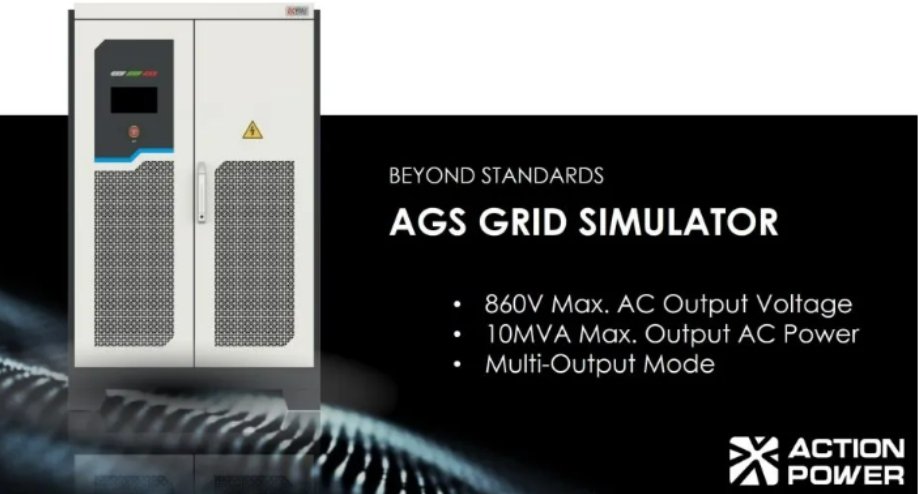
Xi’an ActionPower Electric Co., Ltd. (爱科赛博) is a power-electronics-driven test equipment manufacturer with a strong engineering lineage rooted in high-power programmable sources and bidirectional energy conversion systems. Its regenerative grid simulators are developed with a clear focus on utility-scale renewable energy, high-power converters, and grid-connected equipment validation, spanning from laboratory R&D to full-scale system verification.

Core Strengths
- Strong competency in high-power, tower-type and modular architectures
- Emphasis on dynamic performance, transient fidelity, and power density
- Deep understanding of renewable energy applications including PV, BESS, EV infrastructure, and microgrids
- Scalable platforms covering hundreds of kilowatts to multi-megawatt levels
Representative Grid Simulator Platform
- AGS / TITAN Regenerative Grid Simulator Series, designed for grid-code compliance, fault-ride-through testing, weak-grid emulation, and long-duration regenerative operation at utility-scale power levels.
Pacific Power Inc.
Pacific Power Inc. is a long-established manufacturer specializing in precision AC power sources and grid simulation systems, with a strong footprint in aerospace, defense, and compliance testing. Its transition into regenerative grid simulation builds upon decades of experience in waveform fidelity and programmable AC behavior.

Core Strengths
- Exceptional voltage, frequency, and waveform accuracy
- Mature expertise in compliance testing and standards-driven validation
- Well-suited for certification labs and regulated testing environments
- Strong reliability and long operational lifecycle
Representative Grid Simulator Platform
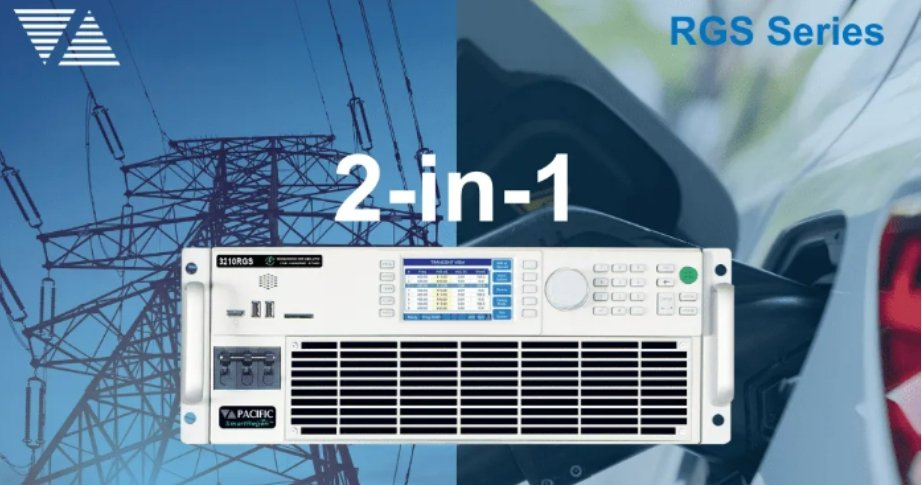
- Regenerative AC Power Source and Grid Simulator Series (e.g., GSZ / AGS families), commonly used for compliance-oriented grid disturbance testing and harmonic behavior verification.
Cinergia
Cinergia is a Spain-based power electronics company known for its compact, modular, and fully regenerative test platforms. It has gained strong visibility in academic, research, and advanced inverter development environments, particularly where flexibility and multi-quadrant operation are critical.

Core Strengths
- Modular, building-block-based architecture
- High efficiency through full regeneration across operating modes
- Flexible system configuration for R&D and experimental setups
- Strong presence in research institutions and innovation-driven labs
Representative Grid Simulator Platform
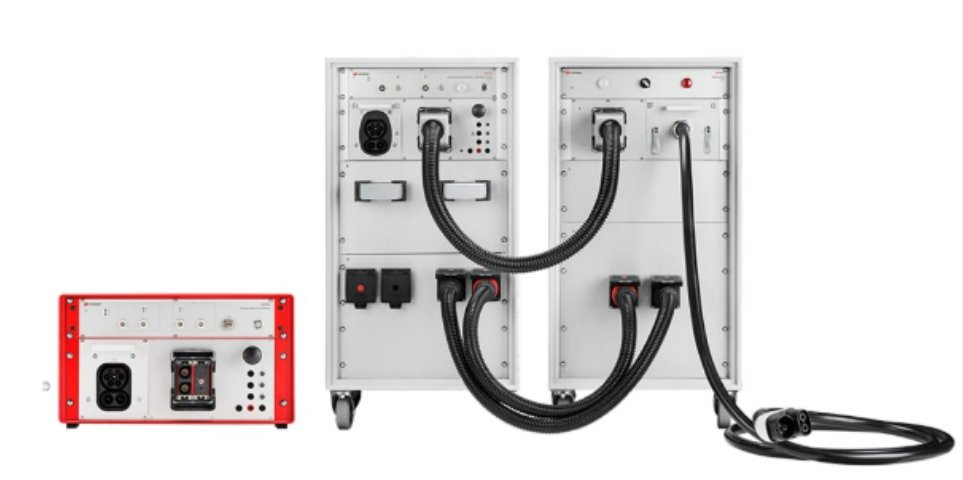
- B2C+ / Grid Emulator platforms, frequently used for converter research, microgrid experimentation, and bidirectional grid interaction studies.
Chroma ATE
Chroma ATE is a well-known supplier of automated test equipment with a broad product portfolio spanning power electronics, EV testing, and renewable energy systems. Its regenerative grid simulators are typically positioned within automated, high-throughput testing environments, supporting both R&D and manufacturing validation.

Core Strengths
- Strong ATE system integration capability
- Broad ecosystem covering PV, EV, battery, and inverter testing
- Good balance between performance, automation, and cost efficiency
- Extensive experience supporting production-line and system-level testing
Representative Grid Simulator Platform
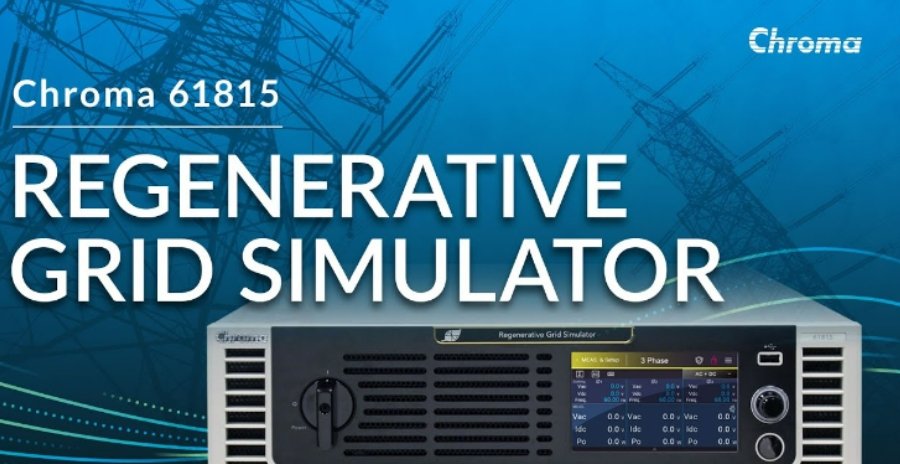
- 61815 Regenerative Grid Simulator and AC Source Series integrated into Chroma’s renewable energy and EV test systems, often deployed in certification labs and mass-production validation setups.
Wrap-Up for Selecting Regenerative Grid Simulator
In summary, the regenerative grid simulator has become a critical enabler for validating modern, power-electronic-dominated energy systems, rather than a simple extension of traditional AC sources. As the grid continues to evolve toward bidirectional energy flow, converter-interfaced generation, and software-defined control, the ability to reproduce realistic grid behavior in a controlled, repeatable environment is no longer optional—it is fundamental to system reliability and regulatory compliance.
While each manufacturer approaches grid simulation from a different technical lineage and application focus, they collectively reflect the same industry reality: grid behavior can no longer be assumed—it must be engineered, emulated, and verified. Selecting the right regenerative grid simulator therefore depends not only on power rating or specifications, but on how well the platform aligns with the target application, control complexity, and long-term testing objectives of the renewable energy system being developed.
